















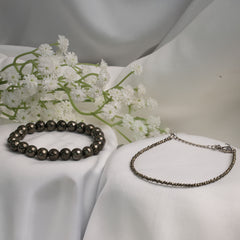

















You hold a Karungali Mala during your morning puja. It feels heavy. It smells like the forest. It feels different from any other mala you have touched before.
But have you ever wondered where it comes from? Who made it? And why does a genuine one feel so different from a fake?
This blog explains exactly how Karungali Mala is made. In simple words. No complicated terms. Just the real story behind this sacred mala.
First, What Is the Karungali Tree
Before understanding how Karungali Mala is made, you need to know the tree.
Karungali is a wild forest tree. It grows in the deep forests of Tamil Nadu, Kerala and Sri Lanka. The name means black wood in Tamil. And that black colour comes from the heart of the tree, not from any paint or coating.
This tree does not grow on farms. It grows wild. It takes many years to become strong enough to give good wood. This is why genuine Karungali beads are rare. And this is why so many sellers sell fake ones.
Our elders knew this tree was special. Ancient Shaiva texts call it one of the eight sacred trees of India. It is not cut casually. It is cut with prayer and respect.
Step 1: Cutting the Tree With Prayer
The first step of how Karungali Mala is made is not cutting. It is praying.
Traditional craftsmen in Tamil Nadu have been making these malas for generations. Before they touch the tree they do a small puja at its base. They offer incense and flowers. They ask the tree for permission.
This is not superstition. This is how sacred craft has worked in India for thousands of years. The intention of the maker enters the mala. A mala made with prayer carries different energy than one made in a factory.
Only the heart of the tree is used. The dark dense core inside the trunk. The outer lighter wood is thrown away. The heartwood is what gives Karungali its weight, its smell and its power.
Step 2: Drying the Wood Slowly
After cutting, the wood is not used immediately. It is dried slowly in the shade for several weeks.
This is an important part of how Karungali Mala is made that cheap manufacturers always skip.
Drying in direct sunlight causes the wood to crack. Slow shade drying keeps the wood strong and dense. It also deepens the natural dark colour of the heartwood.
If a mala maker skips this step, the beads crack over time. You may have seen this with cheap malas. That cracking happens because the wood was never properly dried.
Step 3: Shaping Each Bead by Hand
This is where the real skill begins. This is the heart of how Karungali Mala is made.
The dried wood is cut into small blocks. Each block is then shaped into a round, smooth bead using a rotating tool called a lathe. The craftsman holds a shaping tool against the spinning wood and slowly cuts it into a perfect round shape.
This takes patience. Each bead is shaped one by one. By hand. No machine does this perfectly. The craftsman's hands guide every single bead.
Here is how you spot a genuine handmade bead. Look closely at 10 beads in the mala. Each one will look slightly different. Slightly different grain. Slightly different shade of dark. That variation is proof of real heartwood and real handwork.
Fake beads look identical. Perfect. Uniform. Like plastic. Because they are.
Step 4: Drilling the Hole
After shaping, a small hole is drilled through the centre of each bead. This sounds simple. But it matters more than you think.
A well-drilled hole is perfectly centred. This makes the mala hang straight and balanced in your hand during japa. An off-centre hole makes the bead tilt. The mala feels uneven. The thread wears out faster.
Good craftsmen drill each bead carefully. They check the alignment by eye. This small step is a big part of how Karungali Mala is made the right way.
Step 5: Smoothing and Finishing
After drilling, each bead is smoothed by hand using fine sandpaper. This is done in stages, from rough to smooth to very fine.
No varnish. No lacquer. No synthetic coating.
A genuine Karungali bead gets its shine from sanding alone. Some makers do one final wipe with a soft cloth and a tiny drop of sesame oil. That is it. That natural finish is what makes the bead feel warm and alive in your hands.
If a bead looks too shiny, too glossy, too perfect, it has been lacquered. That coating seals the wood. It blocks the natural energy and fragrance of the Karungali heartwood. Avoid it.
Step 6: Choosing Only the Best Beads
Not every bead that is shaped makes it into a mala. Good craftsmen reject a large number of beads at this stage.
They check every bead for:
- Size. All 108 beads should be nearly the same size
- Colour. Darker beads mean denser heartwood and stronger energy
- Surface. No cracks, no splits, no deep marks
- Hole. Clean and centred
This selecting stage is a quiet but important part of how Karungali Mala is made properly. Cheap manufacturers skip it entirely and string whatever comes off the machine.
Step 7: The Sumeru Bead
Every complete Karungali Mala has 108 beads plus one special bead called the Sumeru. It is also called the guru bead or the head bead.
The Sumeru is slightly bigger than the other beads. It marks the start and end of the mala. During japa when you reach the Sumeru, you do not cross it. You turn the mala around and go back. This keeps the energy moving in a circle.
In traditional how Karungali Mala is made practice the Sumeru is carved from the same piece of heartwood as the other beads. Same tree. Same energy. One continuous sacred object.
Step 8: Stringing With Knots Between Every Bead
This is the final step of how Karungali Mala is made, and it is where you can immediately spot quality.
Pick up any mala. Look between the beads. Is there a small knot between each one?
If yes, it is made properly. If the beads are strung directly touching each other with no knots, it is not.
Those knots between each bead serve two purposes. They stop the beads from rubbing against each other and wearing down. And if the thread ever breaks you lose only one or two beads. Not all 108 on the floor.
A properly knotted 108-bead Karungali Mala takes an experienced craftsman two to three hours to string by hand. That time and care are what you are paying for when you buy a genuine mala.
Step 9: Energising Before It Reaches You
The last step of how Karungali Mala is made in the traditional way is energising.
A finished mala is placed on a Shiva or Shani altar. Sacred ash or Gangajal is sprinkled on it. The craftsman or a priest chants Om Namah Shivaya or the Shani beeja mantra 108 times over the mala.
This is the moment the mala stops being just a string of beads. It becomes a sacred tool.
At Astrotalk Store every Karungali Mala is energised with mantras before it is packed and sent to you. It arrives at your home ready to wear. Ready for japa. Ready to protect.
How to Know If Your Karungali Mala Is Genuine
Now that you know how Karungali Mala is made you can check your own mala in two minutes.
Pick it up and ask yourself:
- Does it smell like wood or like chemicals?
- Does it feel heavy for its size?
- Do the beads look slightly different from each other?
- Is there a knot between every bead?
- Does the surface feel natural or plasticky?
If the answer to all five is yes, you have a genuine mala. If even two answers are no, you likely have a fake.
Where to Buy a Genuine Karungali Mala
Now that you know exactly how Karungali Mala is made the right way, buying the wrong one feels like a waste. Astrotalk Store works directly with traditional craftsmen in Tamil Nadu to bring you genuine handcrafted Karungali Mala.
✓ Real Karungali heartwood, not painted or coated
✓ Hand-turned and hand-knotted between every bead
✓ Energised with mantras before dispatch
✓ Trusted by devotees across India
✓ Fast delivery to your home anywhere in India
👉 Buy Genuine Karungali Mala at Astrotalk Store
Frequently Asked Questions
Q. How do I know if my Karungali Mala is real or fake?
Real Karungali smells like wood, feels heavy, has grain variation between beads and has knots between every bead. Fake ones are light, smell of chemicals and look too perfect.
Q. Why does a genuine Karungali Mala cost more?
Because real heartwood is rare, each bead is shaped by hand and knotting 108 beads takes hours. Cheap malas skip all of this. You get what you pay for.
Q. Can I make Karungali Mala at home?
The wood shaping and drilling require tools and skill. But you can re-string a broken mala at home using silk or cotton thread with knots between each bead.
Q. Why does my Karungali Mala smell so strongly when new?
That is the natural fragrance of Karungali heartwood. It is completely normal and considered auspicious. The fragrance slowly becomes subtle with daily wear.
Q. How long does a good Karungali Mala last?
With basic care, for many years. Wipe after use, apply a drop of sesame oil monthly and avoid soaking in water. Some families pass the same mala down generations.
Q. What is the right way to store Karungali Mala?
Keep it in a clean cotton pouch or on your puja shelf when not wearing. Never place it on the floor or in a pocket with keys or coins.